
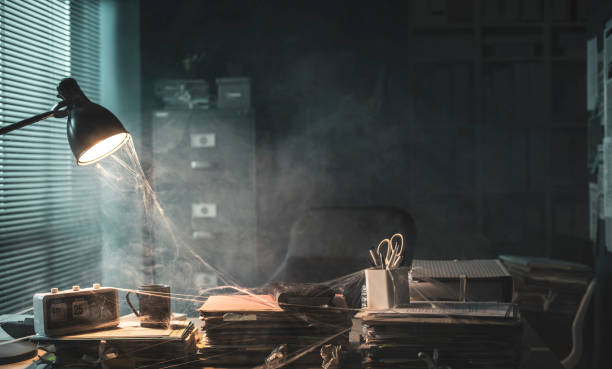
A horror film can look polished and still feel flat. The lighting may be dark, the music tense, and the creature design memorable, yet the fear never settles in.
That problem can start before the camera rolls. Mood is built into the script through pacing, dialogue, character behavior, scene order, and how much information the audience receives.
Later departments shape those ideas on screen, but the screenplay gives them the emotional base.
Mood Begins With What the Script Holds Back
Horror depends heavily on expectation. If a script explains the danger too quickly, the audience has less room to imagine what may be waiting off-screen. Good writing controls when answers arrive and when they do not.
Write the Feeling Before Chasing the Scare
Ask one question in every horror scene: what should the audience feel at the end that they did not feel at the start?
Picture a character returning home and noticing that the kitchen light is on. One version sends a masked figure through the doorway immediately. Another lets the character check the house, hear a faint noise, find nothing, and then notice that a chair has moved.
The second version creates unease through uncertainty.
Let Pacing Change as Danger Gets Closer
A quiet sequence may allow longer action lines and pauses. During a chase, shorter descriptions can create a faster rhythm.
The mistake is making every scene urgent. Constant pressure leaves little contrast, so frightening moments can start losing force.
Dialogue Can Hold Tension or Break It
Horror dialogue must sound believable while carrying story information, relationships, suspicion, and fear. When characters explain everything they know, tension can disappear quickly.
Let Characters Speak Around What Scares Them
People do not always describe fear directly. They avoid topics, change subjects, joke, or pretend something is normal.
Imagine two siblings hearing footsteps upstairs in an empty house. A weak exchange explains why the footsteps are impossible. A stronger one focuses on one sibling insisting that the other stay downstairs. The audience understands the fear without getting a full explanation.
Polish Dialogue Without Removing Personality
Spoken language is not formal prose. Fragments, interruptions, repeated words, and unfinished thoughts can sound natural when they fit the character.
A writer may use a grammar checker to catch obvious mistakes elsewhere in a draft, but dialogue still needs a human pass. A technically correct sentence can sound false when spoken aloud. Reading each scene out loud can expose stiffness that is easy to miss on the page.
The better question is: “Would this person really say it this way right now?”
The Script Gives Sound and Visuals Something to Build On
Screenwriters do not need to dictate every camera angle or musical cue. They can still give the production team useful material for sound, framing, lighting, and performance.
Build Scenes Around Specific Sensory Details
“Hannah walks through a scary room” gives little to work with. A stronger version might include a faulty refrigerator hum, wet footprints near the back door, and a hallway light that no longer works.
Those details give the sound team, camera crew, and actor something concrete to use. Two strong details often do more for mood than a paragraph describing every object.
Give Actors Behavior Instead of Invisible Emotion
Scripts work better when emotion can be performed.
Writing “Marcus feels that something terrible is coming” tells the reader what is inside his head. Writing “Marcus checks the lock again, then leaves his hand on it” gives the actor an action that carries the same feeling on screen.
Small behavior can create suspicion before the story confirms what is wrong.
Give the Finished Draft a Mood Pass
A normal proofread checks clarity, consistency, and errors. A horror screenplay also benefits from a separate read focused on emotional pressure. The goal is to see whether the intended mood survives from scene to scene.
Ask Four Questions as You Reread
- What should the audience feel here? If the answer is unclear, the scene may lack purpose.
- What information is being withheld? Mystery needs control, not random confusion.
- Does the dialogue explain what acting could show? Cut lines that repeat visible behavior.
- Is the rhythm changing enough? Mix quiet scenes, rising pressure, release, and sharper bursts of danger.
If every scare comes from a sudden noise or every tense scene happens in darkness, the film may start feeling predictable.
Conclusion
Writing shapes the mood of a horror film long before lighting, music, editing, or visual effects enter the process. The screenplay decides what the audience knows, how long uncertainty lasts, how characters respond to danger, and where the story speeds up or slows down.
Mood works best when it is built into the scene itself. Clear emotional beats, believable dialogue, controlled information, and performable behavior give the people bringing the script to the screen stronger material to work with. That is often where convincing horror begins.

For over 20 years the Horror Asylum has continued to bring you the very best genre news, reviews, giveaways and interviews in the horror world.